Written by Cherrae L. Stuart
Modern entertainment has become a landscape of niches.
The internet has made it possible for creators to find audiences built around almost any interest imaginable. Whether you’re obsessed with military science fiction, cozy fantasy, romantasy shadow-daddies, or tabletop RPGs set in post-apocalyptic shopping malls, chances are someone is making exactly what you’re looking for.
The upside is that there’s never been more choice.
The downside is that truly universal crossover hits have become increasingly rare.
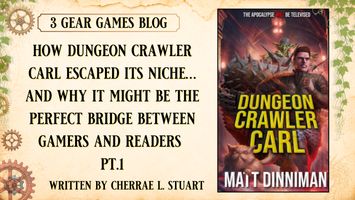
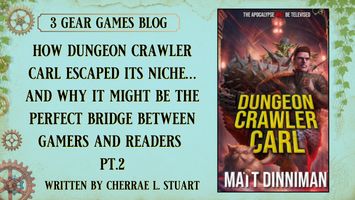
That’s what makes Dungeon Crawler Carl such a fascinating success story.
On paper, Matt Dinniman’s series should have remained a cult favorite. It’s a LitRPG—a genre that openly embraces video game mechanics like levels, skill trees, inventory management, loot drops, and boss fights. For years, LitRPG occupied a passionate but largely self-contained corner of speculative fiction, beloved by gamers but often dismissed by traditional fantasy readers as novels with character sheets attached.
Instead, Dungeon Crawler Carl has become the series that captured fandoms.
But what’s it about?
When an alien civilization suddenly conquers Earth, humanity is given one chance to
survive: compete in the galaxy’s most popular reality show. The planet is transformed into a
sprawling, monster-filled dungeon where every trap, boss battle, and brutal decision is broadcast to billions of extraterrestrial viewers. Armed with little more than his boxers and accompanied by Princess Donut (his ex-girlfriend’s prize-winning cat, who quickly becomes the dungeon’s most unlikely diva) Carl must level up, gather allies, outsmart impossible odds, and survive one floor at a time in a game where entertainment is just as important as staying alive.
Each book in the series follows Carl and Donut as they finish levels, gain and lose friends and enemies and the psychological toll the carnage takes on both of them.
Today it’s recommended just as often in fantasy book clubs as it is on gaming forums. It
routinely dominates audiobook recommendation lists, has sold millions of copies, and inspired a Webtoon, graphic novels, a tabletop RPG, and is now headed to television.
The obvious question is: Why this series?
Part of the answer is that Dinniman understands something fundamental about games. The mechanics aren’t the story. They’re the language the story is told in.
Carl’s journey through a galaxy-wide death game feels familiar to anyone who’s spent nights chasing legendary loot in Diablo, organizing a raid in World of Warcraft, or arguing over character builds around a Dungeons & Dragons table. But progression never exists for its own sake. Every new ability creates harder choices. Every victory makes the next challenge more dangerous. That’s why the books work equally well for people who’ve never rolled a d20.
My own gateway into the series was the audiobook. Normally, I think of audiobooks as a matter of convenience. I want to read, but I’m also driving, folding laundry, or tackling the kind of chores that don’t require much brainpower. They’re a practical way to fit more books into my life, and it’s rare that I’d recommend an audiobook with the same enthusiasm as the text itself.
Dungeon Crawler Carl is one of those rare exceptions.
If Matt Dinniman supplied the architecture, narrator Jeff Hays built the front door.
Calling Hays’ work “audiobook narration” severely undersells what’s happening. Through his production company Soundbooth Theater, he performs dozens of distinct voices with a theatrical precision that had me so confused. There was no way I was hearing a single performer! Princess Donut’s outsized personality is perfection. The System AI’s gleeful, increasingly unhinged sadism is terrifying and hilarious. Carl’s weary sarcasm tugs at the heart as he barely holds onto his sanity under the crushing pressure. Each voice feels fully inhabited. It’s one of the rare audiobook performances that people recommend before they recommend the books themselves, and for many fans, (myself included) the audio editions became their first experience with the series. Dinniman himself has said the audiobooks have outsold the print editions, a testament to just how transformative Hays’ performance has been. (Wikipedia)
The series’ rise is also a case study in modern publishing.
Like many breakout successes of the past decade, Dungeon Crawler Carl didn’t begin in a Manhattan publishing office. Dinniman first serialized the story online before self-publishing it, building an audience one reader at a time. Only after proving there was a massive appetite for the series did Penguin Random House’s Ace Books acquire the print rights, allowing Dinniman to keep control of his digital editions while bringing the books into bookstores around the world. It’s a publishing trajectory that would have been almost unimaginable twenty years ago, but today stands as one of the clearest examples of independent publishing reshaping the industry.
(Wikipedia)
.... continue on to part 2